A designer needs a dense infographic -- three rows, nine panels, each with its own chart, labels, and bilingual captions. Normally that is nine separate image generations plus manual layout work in Figma. With Qwen Image 3.0, it is one prompt. One 3,700-token instruction goes in, and a finished nine-panel grid comes out with every label rendered correctly across two languages.
Alibaba's Qwen team released Qwen-Image-3.0 on July 21, 2026, and the pitch is clear: generated images should function as working documents, not just nice pictures to look at. This third-generation model processes prompts up to 4,500 tokens, renders text natively in 12 languages, and produces structured outputs like knowledge graphs, UI mockups, and math-heavy academic layouts -- all from a single generation pass.
This article covers everything you need to know: what changed from 2.0 to 3.0, the full feature set, how to access it, who should care, and where it fits in the broader AI image generation landscape as of July 2026.
The Qwen Image Model Family: A Brief Timeline
Before diving into 3.0, it helps to understand where it sits in the lineage. Each version of Qwen Image has made a significant leap, both in capability and in how Alibaba positions the model.
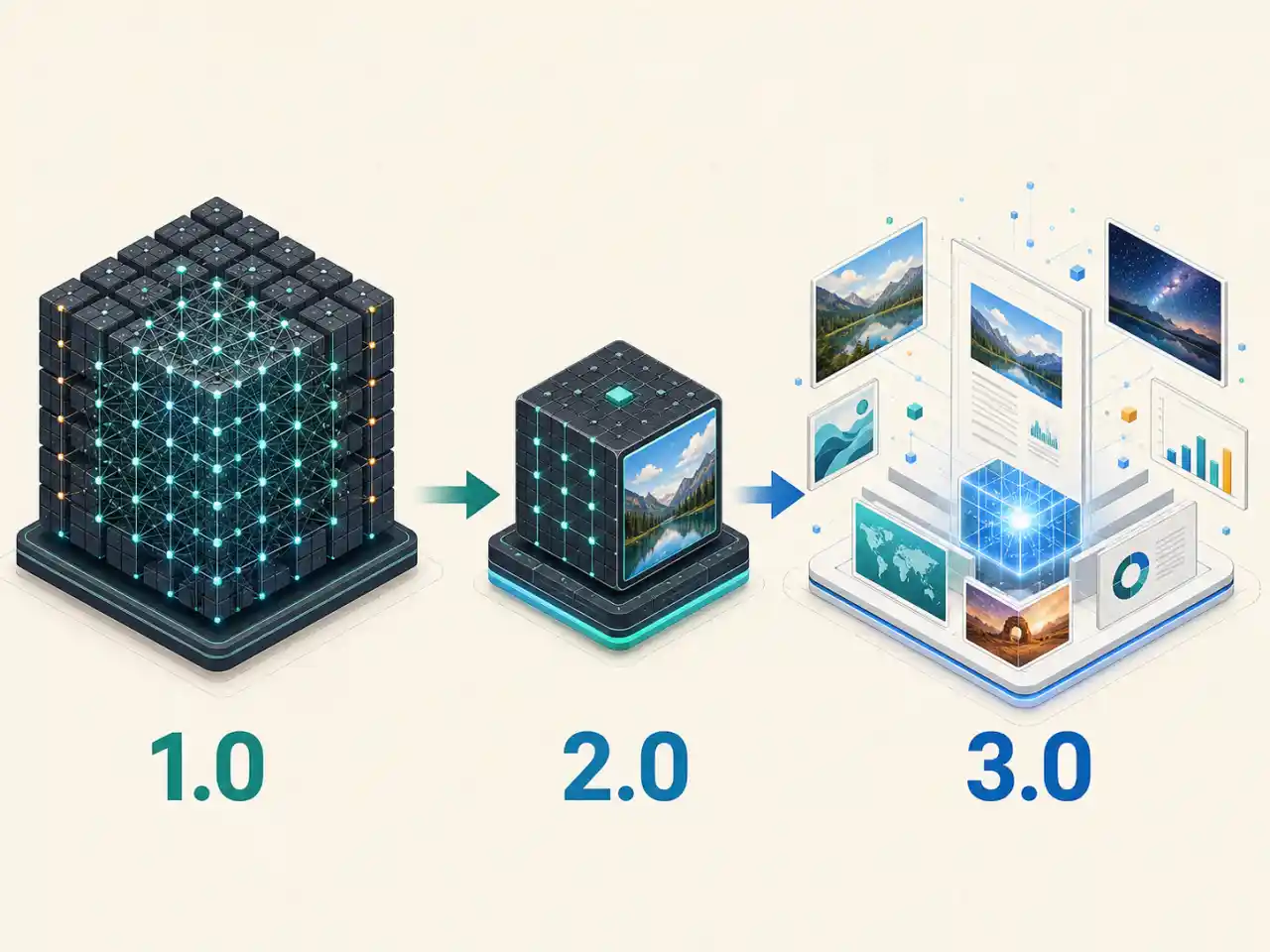
Qwen-Image 1.0 (August 2025)
The debut release. A 20-billion parameter model shipped under an Apache 2.0 license with open weights on Hugging Face and ModelScope. A same-day technical report detailed the architecture, training data, and benchmark results. The model's standout feature was high-fidelity Chinese and English text rendering -- a capability that most competing models handled poorly or not at all.
For the open-source community, this was a landmark release. A production-quality image generation model with commercial-use rights, no strings attached.
Qwen-Image 2.0 (February 2026)
The efficiency upgrade. Alibaba cut the parameter count from 20B to 7B -- nearly 3x smaller -- while improving output quality across the board. Qwen-Image 2.0 climbed to the top of AI Arena, a blind human evaluation platform, ranking first in both text-to-image generation and image editing categories.
Key additions included native 2K resolution output, a unified generation-plus-editing pipeline, and the ability to generate complex layouts like PPT slides, movie posters, comics, and infographics directly from text prompts. The model supported roughly 1,000-token prompts.
Qwen-Image 2.0 also shipped with a technical report, though the open-weight status was more limited than 1.0's fully permissive release.
The launch video below demonstrates Qwen Image 2.0's typography, 2K image generation, and unified generation-and-editing workflow.
Qwen-Image 3.0 (July 2026)
The current release. The headline jump is from ~1,000 tokens to 4,500 tokens of prompt input, with expanded multi-language support and a focus on producing information-dense functional visuals. The release represents a strategic shift: no benchmark tables, no parameter counts, no model weights, no technical report. Users are directed to Qwen Chat and Alibaba Cloud's Bailian API to try it.
| Version |
Release |
Parameters |
Prompt Length |
Open Weights |
Technical Report |
| 1.0 |
Aug 2025 |
20B |
~500 tokens |
Yes (Apache 2.0) |
Yes |
| 2.0 |
Feb 2026 |
7B |
~1,000 tokens |
Limited |
Yes |
| 3.0 |
Jul 2026 |
Undisclosed |
4,500 tokens |
No |
No |
What Makes Qwen Image 3.0 Different: Core Features
Ultra-Long Prompt Support (4,500 Tokens)
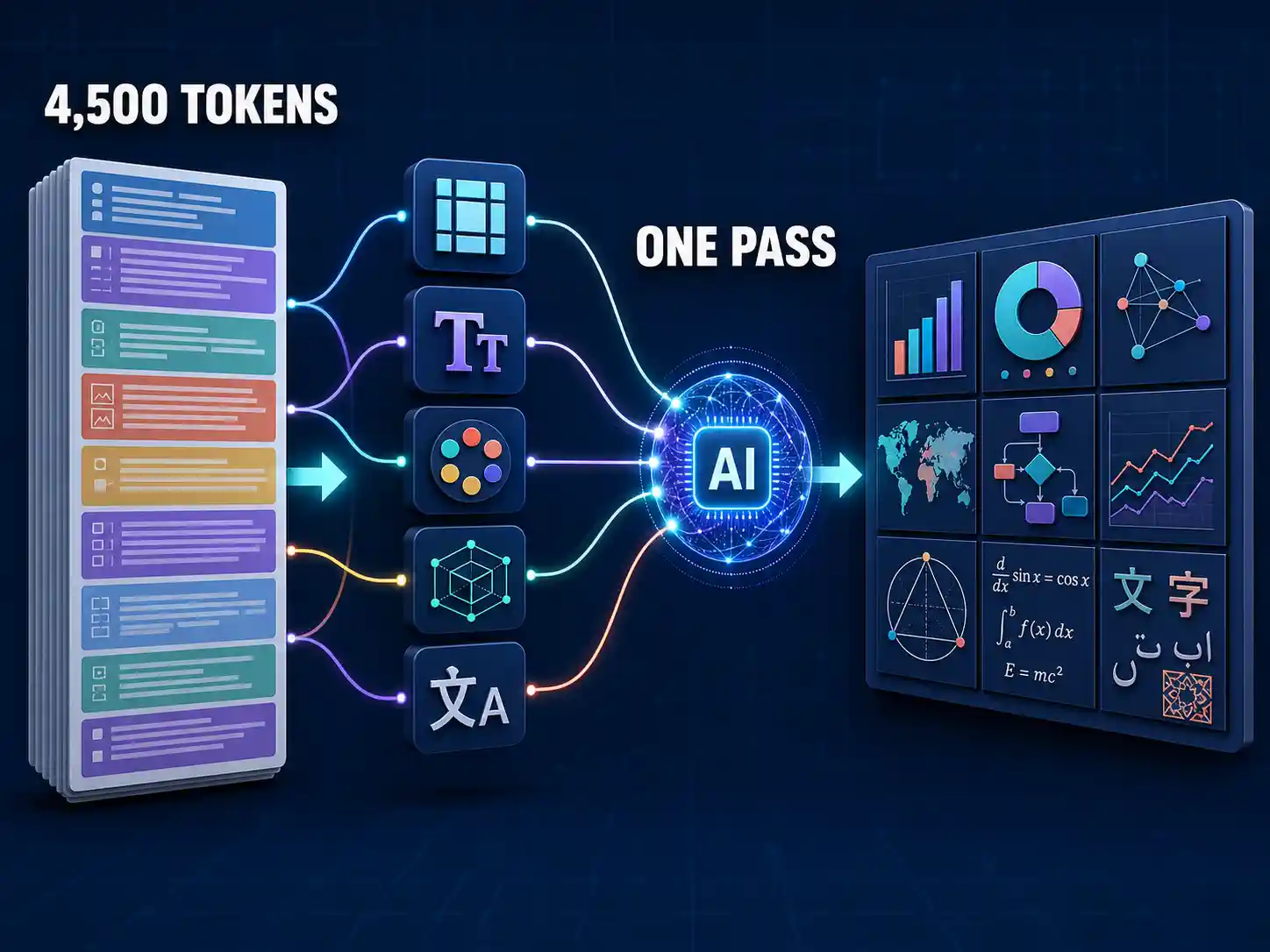
This is the most concrete upgrade over 2.0. Where the previous model topped out around 1,000 tokens, Qwen Image 3.0 accepts instructions up to 4,500 tokens long. That is roughly 3,000-3,500 words of detailed description in a single prompt.
Why does prompt length matter? Because complex images require complex instructions. A 1,000-token limit forces you to keep descriptions generic or break a composition into multiple generation steps. With 4,500 tokens, you can specify:
- Exact text content for every label, caption, and heading in an infographic
- Precise spatial relationships between elements ("the bar chart occupies the upper-left quadrant, the pie chart sits below it, and the legend runs along the right margin")
- Per-element styling instructions (font choices, color palettes, line weights)
- Multi-panel layouts with distinct content in each panel
Alibaba's demo reel shows a three-by-three grid of unrelated infographics generated from a single 3,700-token instruction -- not assembled from nine separate images, but produced as one coherent output.
12-Language Text Rendering
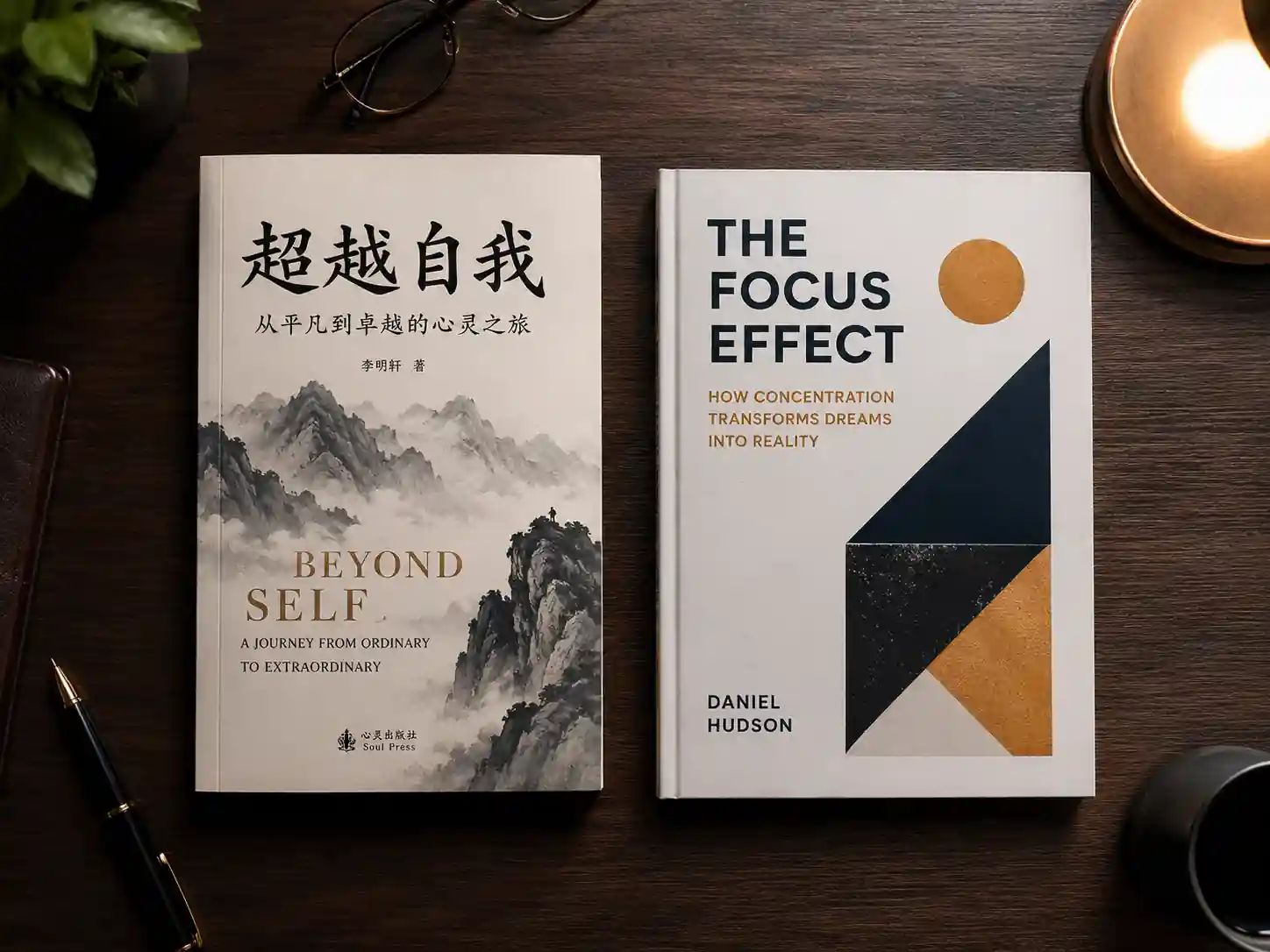
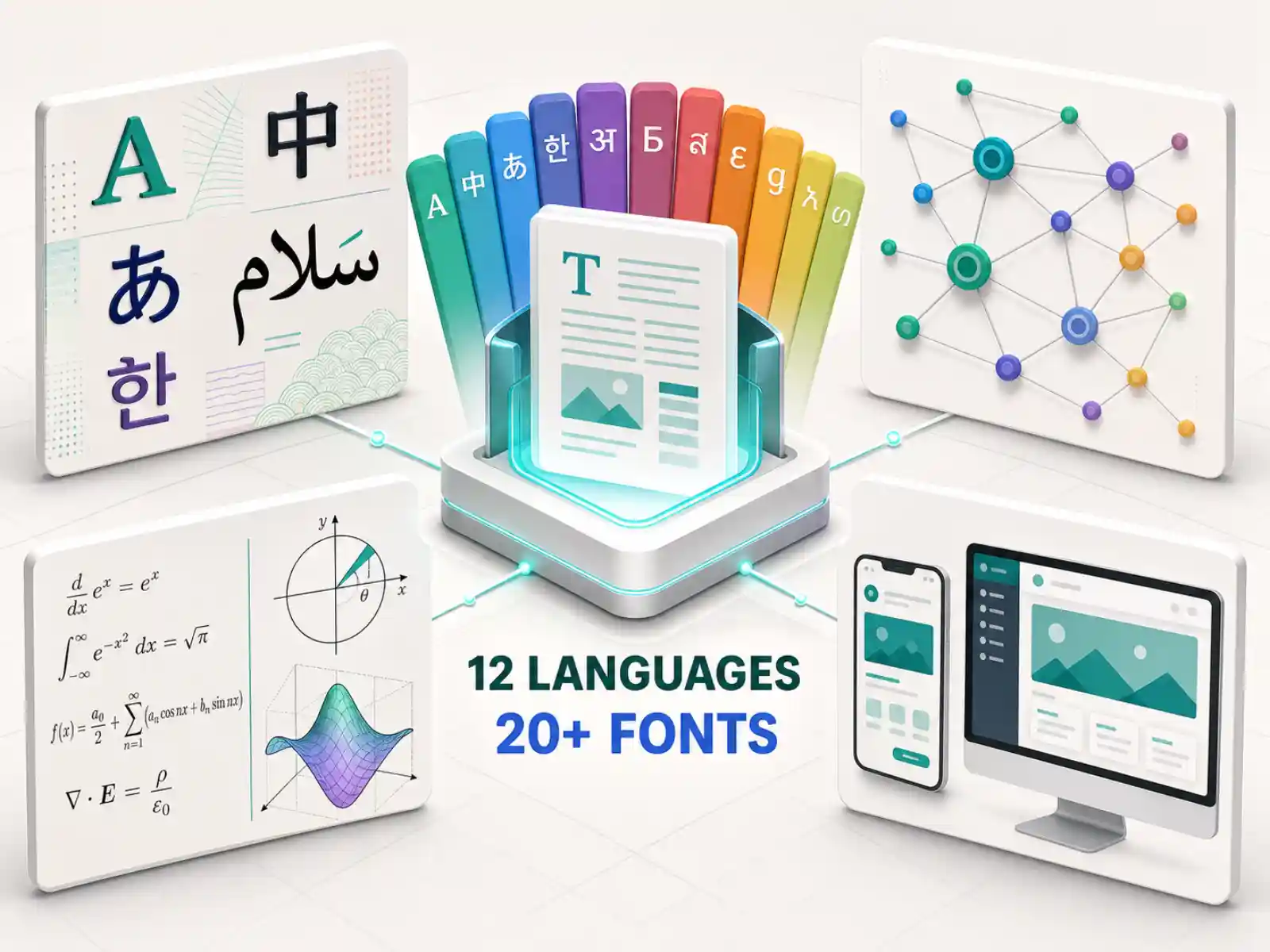
Qwen Image 3.0 renders text natively in 12 languages with over 20 font options. Text as small as 10 pixels remains legible in the output. This is not overlaid text added in post-processing -- the model generates the text as part of the image pixels.
The model's Chinese text rendering has been a standout since version 1.0, and 3.0 extends that quality across a broader language set. For teams producing multilingual marketing materials, product packaging, or educational content, this eliminates the step of generating an image and then manually adding translated text layers.
Complex Structured Outputs
This is where Qwen Image 3.0 diverges most sharply from models focused primarily on photorealistic or artistic output. The model is built to generate functional visual documents:
- Knowledge graphs and diagrams: Node-and-edge layouts with labeled connections, suitable for educational materials or documentation
- Mathematical formulas and notation: Properly typeset equations, Greek symbols, subscripts, and superscripts rendered within larger compositions
- UI layouts and wireframes: Screen mockups with buttons, text fields, navigation bars, and placeholder content
- Infographics and data visualizations: Charts, tables, and annotated graphics with accurate text labels
- Newspaper and magazine pages: Multi-column layouts with headlines, body text, pull quotes, and image placeholders
- Academic paper layouts: Title blocks, abstracts, section headings, equations, and figure captions in proper academic formatting
The common thread is information density. These are not prompts asking for "a beautiful sunset." They are prompts that specify dozens of discrete text elements, spatial relationships, and formatting rules -- and the model handles them in one pass. If writing prompts at this level of detail is new to you, browsing a prompt library with structured examples can help you develop an intuition for how to describe complex compositions.
Unified Generation and Editing Pipeline
Like its predecessor, Qwen Image 3.0 bundles image generation and image editing into a single model. You can use it to create images from scratch or modify existing ones through text instructions.
Editing capabilities demonstrated in the release include:
- Semantic edits: Changing objects, scenes, or elements within an existing image based on natural language instructions
- Text rewriting: Modifying text within an image while preserving the surrounding font, style, and layout -- changing a headline on a poster without regenerating the entire image
- Ancient painting restoration: Reconstructing damaged or faded sections of traditional artwork
- Panorama generation: Extending an image's field of view to create wider panoramic scenes
- Sketch-to-PPT conversion: Transforming rough hand-drawn sketches into polished presentation slides
- Handwritten annotation: Adding natural-looking handwritten notes and markups to existing images
The editing pipeline is particularly interesting for iterative design workflows. Rather than regenerating an entire image when one element needs to change, you can make targeted modifications while keeping the rest of the composition intact.
How to Access Qwen Image 3.0
As of July 2026, Qwen Image 3.0 is available through several official Alibaba channels. It is not yet available as downloadable weights.
Qwen Chat
The fastest way to try the model. Qwen Chat is Alibaba's chatbot interface, similar to ChatGPT, and it includes image generation powered by Qwen Image 3.0. Free accounts have usage limits, but it is the simplest path to testing the model's capabilities.
Alibaba Cloud Bailian API
For developers and production use cases, Qwen Image 3.0 is available through Alibaba Cloud's Model Studio (Bailian) platform. This provides API access for integrating the model into applications, workflows, and products. Pricing follows Alibaba Cloud's standard API billing structure. New users may receive trial credits depending on region.
Qwen Mobile App
Alibaba's mobile app includes access to the model, bringing image generation to phone-based workflows.
What About Open Weights?
This is the biggest change from prior releases. Qwen-Image 1.0 shipped with fully open weights under Apache 2.0. Qwen-Image 2.0 was more limited but still provided some open access. Qwen Image 3.0 has launched with no downloadable weights, no model card, and no technical report.
For developers who built workflows on the open-source Qwen Image models, this is a significant shift. It means you cannot self-host 3.0, fine-tune it, or run it offline. You are dependent on Alibaba's API infrastructure for access.
Whether weights will follow later -- as has happened with some other model families -- remains to be seen. The previous versions (1.0 and 2.0) are still available on Hugging Face and GitHub.
Qwen Image 3.0 vs. 2.0: What Actually Changed
Here is a side-by-side comparison of the two most recent versions:
| Feature |
Qwen Image 2.0 |
Qwen Image 3.0 |
| Prompt length |
~1,000 tokens |
4,500 tokens (4.5x increase) |
| Language support |
Chinese + English focus |
12 languages, 20+ fonts |
| Text rendering quality |
Strong (AI Arena #1) |
10px legible text, expanded fonts |
| Structured outputs |
PPT, posters, comics, infographics |
+ Knowledge graphs, UI layouts, math notation, academic papers |
| Editing |
Unified gen + edit |
+ Panorama, sketch-to-PPT, painting restoration |
| Parameters |
7B |
Undisclosed |
| Resolution |
Native 2K |
Not specified |
| Benchmarks |
AI Arena #1 (blind human eval) |
None published |
| Open weights |
Limited |
None |
| Technical report |
Published |
None |
The clearest upgrade is prompt capacity. Going from 1,000 to 4,500 tokens is not an incremental improvement -- it fundamentally changes what you can ask the model to produce in a single generation step. Layouts that previously required multiple generation passes and manual compositing can now be described in full detail.
The trade-off is transparency. With 2.0, independent developers could verify Alibaba's claims against published benchmarks and test the open weights directly. With 3.0, all performance claims rest on Alibaba's demonstration outputs. There is no independent evaluation data available at launch.
Who Should Care About Qwen Image 3.0
Qwen Image 3.0 is not targeting the same audience as models like Midjourney or DALL-E. Its strengths are functional and enterprise-oriented, not purely aesthetic.
Designers and Marketing Teams
The combination of ultra-long prompts, 12-language text rendering, and structured output capabilities makes this model particularly relevant for producing marketing materials, product packaging, and multilingual campaign assets. Generating a complete infographic or product brochure layout from a single prompt -- with accurate text in multiple languages -- is a genuine workflow improvement.
If you are building applications that need to generate documents, reports, or data visualizations programmatically, Qwen Image 3.0's structured output capabilities are directly relevant. The API access through Alibaba Cloud Bailian makes integration straightforward for cloud-native applications.
Educators and Academic Content Creators
The ability to render mathematical notation, knowledge graphs, and academic paper layouts opens up use cases in educational content production. Generating labeled diagrams, formula sheets, or annotated scientific illustrations from detailed text descriptions could significantly speed up content creation.
Chinese-Speaking Teams and Multilingual Operations
Qwen Image has maintained best-in-class Chinese text rendering across all three versions. For teams that need accurate Chinese, Japanese, Korean, or other CJK character rendering in generated images, this remains the strongest option available. The expansion to 12 languages in 3.0 broadens the multilingual use case further.
Who This Is Not For
If your primary use case is photorealistic art generation, stylized illustrations, or creative image composition without heavy text requirements, other models may serve you better. Qwen Image 3.0's differentiators are all about structured, text-rich, information-dense outputs. For pure aesthetic image generation, models like GPT Image 2, Midjourney, or Ideogram 4.0 have more established track records and communities.
The Transparency Question: No Benchmarks, No Weights
It is worth addressing the elephant in the room. Every previous Qwen Image release came with open weights, benchmarks, or both. Version 3.0 arrived with neither.
This matters for several reasons:
For developers: Without weights, you cannot self-host, fine-tune, or audit the model. You are fully dependent on Alibaba's API availability, pricing decisions, and terms of service. If Alibaba changes its pricing or deprecates access, your integration breaks.
For researchers: Without benchmarks or a technical report, there is no way to independently verify how 3.0 compares to competitors. The only evidence available is Alibaba's curated demonstration outputs, which naturally showcase the model's strengths.
For the ecosystem: The shift from open to closed mirrors a broader industry trend. OpenAI, Google, and now Alibaba have all moved toward keeping their most capable models behind API walls. The open-source image generation space -- led by models like Flux, Stable Diffusion, and the earlier Qwen Image versions -- remains robust, but the cutting edge is increasingly proprietary.
Whether Qwen Image 3.0's weights will be released later is an open question. Alibaba has not made a statement either way.
How Qwen Image 3.0 Fits in the Broader Landscape
As of July 2026, the AI image generation space is crowded and competitive. Here is how Qwen Image 3.0 positions itself relative to key competitors:
| Model |
Primary Strength |
Text Rendering |
Open Source |
Prompt Limit |
| Qwen Image 3.0 |
Structured/functional visuals |
12 languages, 20+ fonts |
No |
4,500 tokens |
| GPT Image 2 |
Photorealistic, versatile |
Strong (English-centric) |
No |
~1,000 tokens |
| Midjourney |
Artistic/aesthetic quality |
Limited |
No |
~500 tokens |
| Ideogram 4.0 |
Text rendering + aesthetics |
Very strong |
No |
~1,000 tokens |
| Flux |
Open-source flexibility |
Moderate |
Yes |
Varies |
| Qwen Image 2.0 |
Efficiency, open access |
Chinese + English |
Partial |
~1,000 tokens |
Qwen Image 3.0 occupies a distinct niche. It is not trying to be the best model for generating a portrait or a fantasy landscape. It is targeting the use case where generated images need to function as documents -- dense with text, structured with multiple sections, and accurate across languages. If cost is part of your evaluation alongside output quality, take time to explore pricing plans across platforms before locking into a single provider's API.
Frequently Asked Questions
What is Qwen Image 3.0?
Qwen Image 3.0 is the third-generation text-to-image and image-editing model from Alibaba's Qwen team, released on July 21, 2026. It processes prompts up to 4,500 tokens long, renders text in 12 languages with over 20 fonts, and generates complex structured visuals like infographics, knowledge graphs, UI layouts, and academic papers from single-pass text instructions.
Is Qwen Image 3.0 free to use?
You can try it for free through Qwen Chat with standard usage limits. Production API access through Alibaba Cloud Bailian follows Alibaba's paid pricing structure, though new users may receive trial credits.
Is Qwen Image 3.0 open source?
No. Unlike Qwen-Image 1.0 (Apache 2.0 open weights) and Qwen-Image 2.0 (partial open access), version 3.0 launched without downloadable weights, a model card, or a technical report. The previous versions remain available on Hugging Face and GitHub, but 3.0 is currently API-only.
How is Qwen Image 3.0 different from 2.0?
The biggest change is prompt length: 4,500 tokens versus ~1,000 tokens. Additional improvements include 12-language text rendering (up from a Chinese + English focus), more complex structured output types (knowledge graphs, math notation, UI layouts), and expanded editing capabilities (panorama generation, sketch-to-PPT, painting restoration). The trade-off is reduced transparency -- no benchmarks or weights.
Can Qwen Image 3.0 render text in images?
Yes, text rendering is one of the model's primary strengths. It supports 12 languages with 20+ font options and can render text as small as 10 pixels legibly. This includes complex typographic layouts: multi-column newspaper pages, academic papers with mathematical notation, infographics with hundreds of labeled data points, and multilingual product packaging.
What can Qwen Image 3.0 edit in existing images?
The model supports semantic edits (changing objects or scenes), text rewriting (modifying text while preserving font and layout), ancient painting restoration, panorama generation (extending an image's field of view), sketch-to-PPT conversion, and handwritten annotation. All edits are instruction-driven through natural language prompts.
How does Qwen Image 3.0 compare to GPT Image 2?
They target different strengths. GPT Image 2 excels at photorealistic and versatile image generation with strong English text rendering. Qwen Image 3.0 specializes in structured, text-dense functional visuals with broader multilingual support. GPT Image 2 has a shorter prompt limit (~1,000 tokens) but established benchmarks and a larger user community. The best way to decide is to run the same prompt through a text-to-image tool that supports both and compare the results side by side.
Who should use Qwen Image 3.0?
The model is best suited for designers producing multilingual marketing materials, developers building document or report generation tools, educators creating math-heavy or diagram-rich content, and teams that need accurate CJK text rendering. It is less suited for users primarily interested in photorealistic art or stylized creative images.
What to Do Next
Qwen Image 3.0 pushes AI image generation toward practical, functional document creation -- a direction that matters more for teams producing marketing materials, educational content, and data visualizations than for hobbyist image creation.
If you want to try Qwen Image 3.0 right now, Qwen Chat is the fastest free option. For production use, Alibaba Cloud's Bailian API provides programmatic access. And if you want to compare Qwen's output against other models like GPT Image 2 or Ideogram, you can test multiple models from a single AI image generator without switching platforms.