You built a product landing page last week. The hero image needed a clean product mockup with "Launch Day Sale -- 40% Off" rendered across the top in bold sans-serif. GPT Image 2 nailed it on the first try, but the three credits per generation started adding up fast. By the end of the sprint, you had spent half your monthly credits on marketing visuals alone.
Then a colleague shared a link to Boogu-Image. Ten billion parameters. Apache 2.0 license. Free to run on your own hardware. The benchmark numbers looked competitive. The question hit immediately: could you stop paying for image generation entirely?
That question is more nuanced than a benchmark table can answer. As of July 2026, Boogu-Image 0.1 leads the open-source pack but still trails the commercial flagships. After examining both models across quality, text rendering, image editing, cost, and privacy, here is what actually holds up and what does not.
Quick Answer: Which Should You Pick?
| Category |
Boogu-Image 0.1 |
GPT Image 2 |
Winner |
| Overall quality |
Strong for open-source (#1 on Qwen-Image-Bench) |
Flagship-tier; scores higher across every category |
GPT Image 2 |
| Text rendering |
Good bilingual (Chinese + English) |
95%+ accuracy across many languages and scripts |
GPT Image 2 |
| Image editing |
Supported via Boogu-Image-Edit variant |
Conversational inpainting/outpainting built in |
GPT Image 2 |
| World knowledge |
Limited (celebrities, brands, landmarks) |
Strong reasoning about real-world concepts |
GPT Image 2 |
| Cost |
Free (self-hosted, requires GPU hardware) |
3 credits per image at 1K on aigptimage.com |
Boogu-Image |
| Privacy |
Runs locally; data never leaves your machine |
Cloud-based; images processed on remote servers |
Boogu-Image |
| Licensing |
Apache 2.0 (commercial use allowed) |
Proprietary (closed-source) |
Boogu-Image |
| Ease of use |
Requires ComfyUI or Diffusers setup + GPU |
Turnkey via ChatGPT, API, or web tools |
GPT Image 2 |
| Resolution |
Standard diffusion outputs |
Up to 4K (4096x4096) |
GPT Image 2 |
| Multi-image input |
Not supported |
Up to 16 reference images |
GPT Image 2 |
Short version: If you need the highest image quality, multilingual text accuracy, or a turnkey workflow, GPT Image 2 is the stronger choice. If you need zero ongoing cost, full data privacy, or the freedom to modify and deploy the model yourself, Boogu-Image is worth the setup effort.
What Is Boogu-Image? (July 2026)
Boogu-Image 0.1 is a 10-billion-parameter open-source image generation model released in June 2026 under the Apache 2.0 license. It sits at the top of the open-source image generation landscape, scoring 53.58 on Qwen-Image-Bench -- the highest score among all open-source models as of this writing.
That sounds impressive, and it is. But context matters. On the same benchmark, both GPT Image 2 and Nano Banana 2 score meaningfully higher across every category. Boogu-Image is the best open-source option. It is not the best option overall.
The model supports bilingual text rendering in Chinese and English, basic image editing through a dedicated Edit variant (scoring 4.64 on ImgEdit_O), and standard text-to-image generation. It runs locally on consumer or enterprise GPU hardware using ComfyUI or Hugging Face Diffusers pipelines.
Its known limitations include weaker performance on tasks that require world knowledge -- generating recognizable celebrities, brand logos, famous landmarks, or culturally specific references. These are areas where reasoning-based models like GPT Image 2 have a structural advantage.
What Is GPT Image 2?
GPT Image 2 is OpenAI's closed-source flagship image generation model, released in April 2026. Unlike traditional diffusion models, GPT Image 2 integrates reasoning into the generation process, treating your prompt as a creative brief rather than a keyword list.
Its headline capabilities include 95%+ multilingual text rendering accuracy, layout control, native resolutions up to 4K, support for up to 16 reference images as input, and conversational image editing where you can refine an image through natural-language instructions without starting over.
You can use GPT Image 2 through ChatGPT, the OpenAI API, or third-party platforms. On aigptimage.com, generation costs 3 credits at 1K resolution, 5 credits at 2K, and 8 credits at 4K.
Where GPT Image 2 Wins
1. Image Quality Gap Is Real
Benchmarks tell part of the story. Boogu-Image's 53.58 on Qwen-Image-Bench is the highest open-source score, but GPT Image 2 scores meaningfully higher across every tested category -- photorealism, composition, prompt adherence, and visual coherence.
In practical use, the gap shows up in specific ways. GPT Image 2 produces images with better material differentiation (the difference between matte plastic and brushed metal reads clearly), more intentional compositions (elements are arranged with visual hierarchy, not just placed), and more consistent lighting (shadows and reflections behave physically). Boogu-Image produces good images. GPT Image 2 produces images that require less post-processing before they are ready for production use.
The quality gap is not a binary "good vs bad" situation. For social media posts, blog illustrations, or internal presentations, Boogu-Image's output is more than sufficient. For client-facing commercial work, product photography, or anything that will be printed at scale, GPT Image 2 remains the safer choice.
2. Text Rendering Across Languages
Both models handle text rendering well, which puts them ahead of most competitors. But the scope is different.
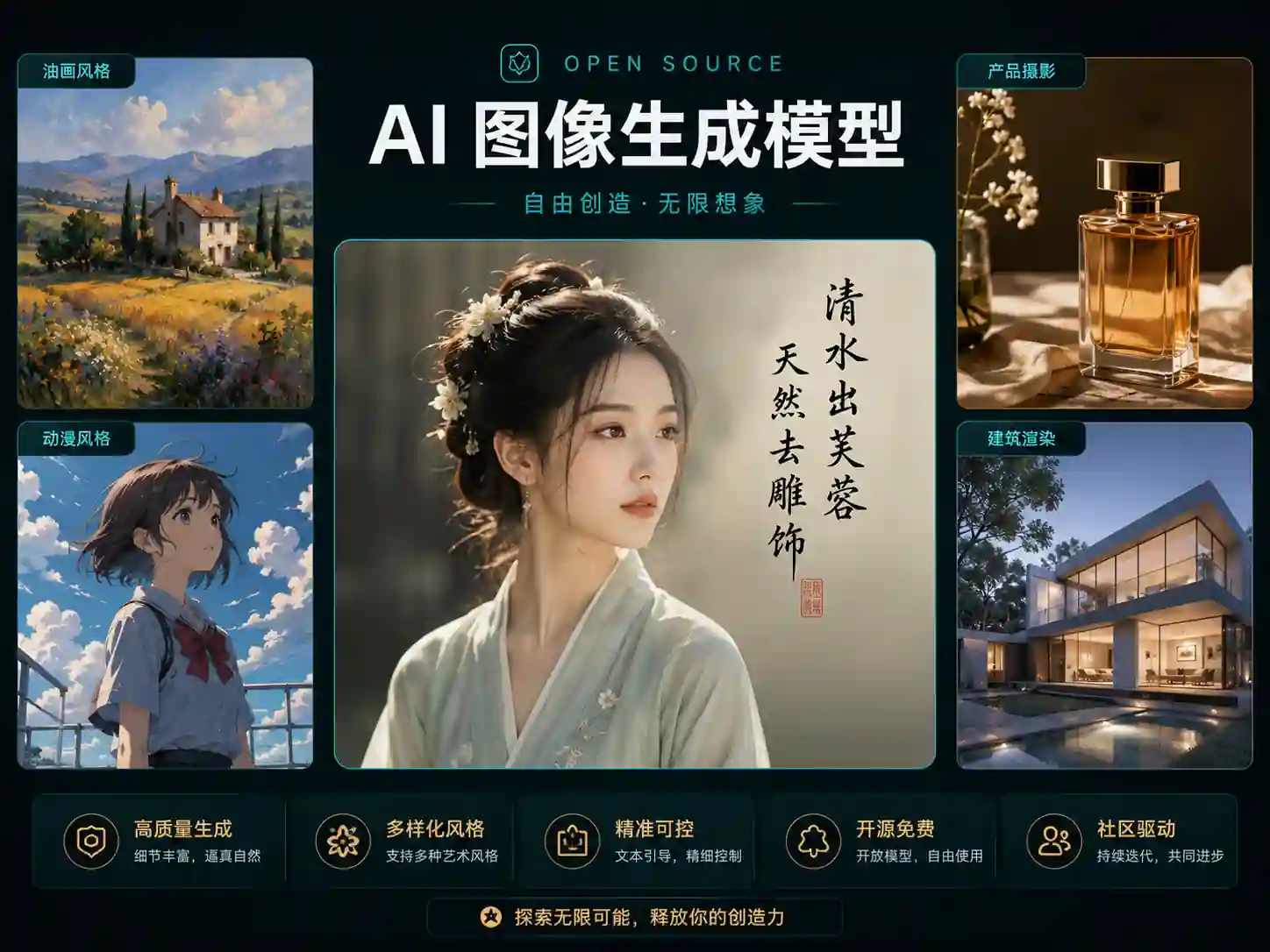
Boogu-Image renders Chinese and English text reliably. For a bilingual audience in those two languages, it is a solid tool. GPT Image 2 supports text rendering across many languages and scripts -- Latin, CJK, Arabic, Cyrillic, and others -- at 95%+ accuracy. If your work involves multilingual content, posters in Japanese, or infographics mixing English and Korean, GPT Image 2 is the only option that covers the full range.
Even within the two languages Boogu-Image supports, GPT Image 2 tends to produce cleaner typography with better kerning, more consistent font sizing, and more accurate placement relative to other image elements.
3. World Knowledge and Context
This is a structural limitation of Boogu-Image that benchmarks do not fully capture.
Ask GPT Image 2 to generate "the Eiffel Tower at sunset with a street market in the foreground." It produces an image where the Eiffel Tower looks like the Eiffel Tower, the street market has French-style awnings and signage, and the sunset lighting matches the westward orientation of Parisian streets. It reasons about the real world.
Ask Boogu-Image the same prompt and you may get a generic tower structure that vaguely resembles the Eiffel Tower, a market scene that lacks cultural specificity, and lighting that does not correspond to any particular geography. The model generates plausible images, but it struggles with prompts that require factual knowledge about specific people, places, brands, or cultural artifacts.
For creative and abstract work, this limitation barely matters. For commercial work that references real-world entities -- a travel blog, a restaurant review, a city guide -- it can be a dealbreaker.
4. Turnkey Workflow
GPT Image 2 is ready the moment you open a browser. Sign into ChatGPT, describe what you want, and the image appears. The API is equally straightforward. On aigptimage.com, you paste your prompt and click generate.
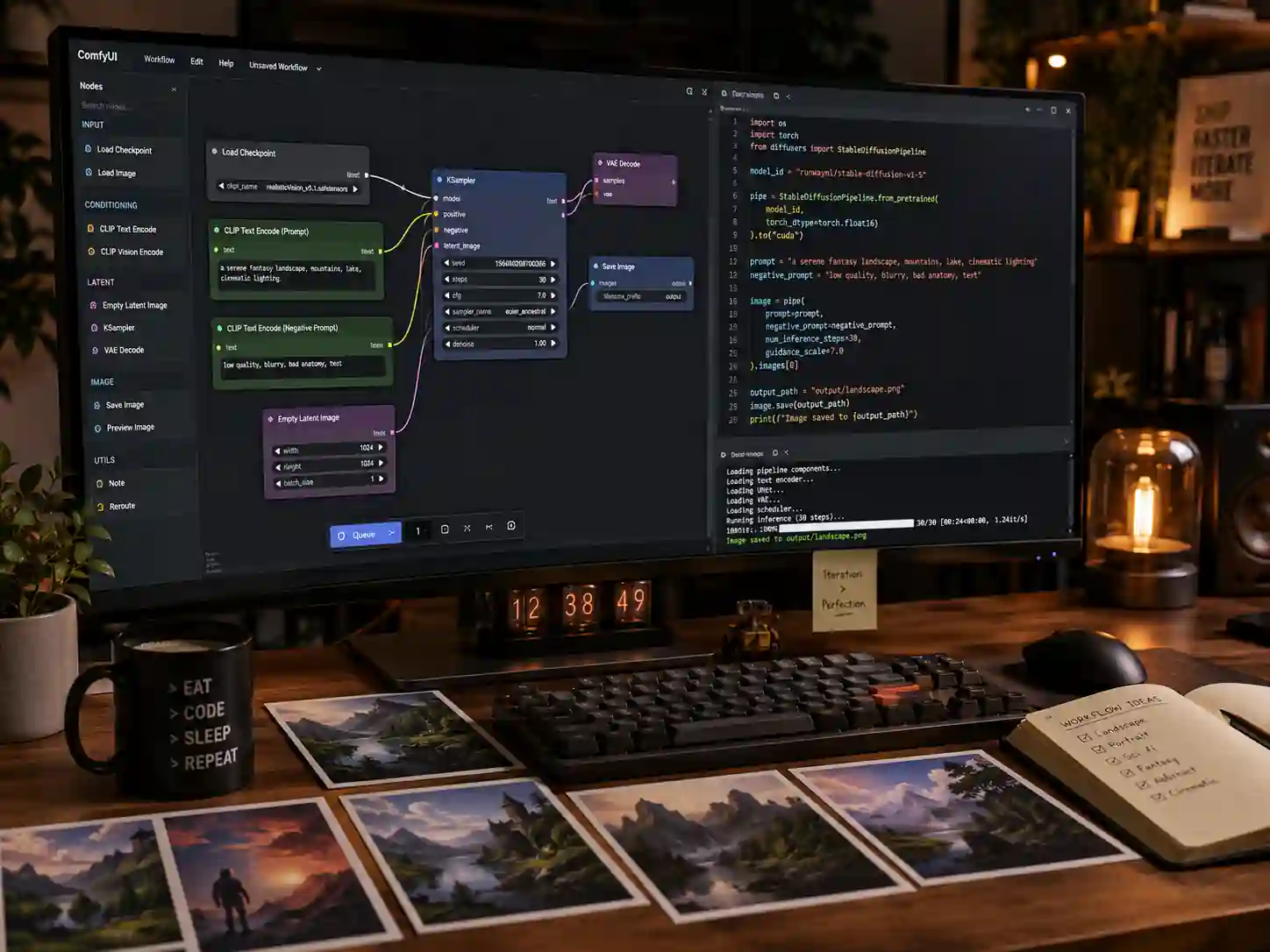
Boogu-Image requires setup. You need a compatible GPU (realistically 16 GB+ VRAM for a 10B model), a working Python environment, either ComfyUI or Hugging Face Diffusers installed and configured, and enough patience to troubleshoot CUDA version mismatches, model weight downloads, and pipeline configuration.
For developers and ML engineers, this is a Tuesday afternoon. For designers, marketers, small business owners, and anyone who treats image generation as a tool rather than a hobby, the setup barrier is significant.
5. Image Editing and Iteration
GPT Image 2 treats image creation as a conversation. Generate an image, then say "swap the background to a beach scene," "make the text larger," or "change the color scheme to navy and gold." Each instruction modifies the existing image without regenerating everything from scratch.
Boogu-Image offers image editing through its dedicated Edit variant, and the ImgEdit_O benchmark score of 4.64 indicates capable performance. But the workflow is different. You are working through ComfyUI nodes or Diffusers code, not natural language. Each edit is a separate pipeline run rather than a conversational refinement. For rapid iteration on commercial assets, GPT Image 2's editing workflow is significantly faster.
Where Boogu-Image Wins
6. The Price Is Zero (Sort Of)
This is Boogu-Image's most compelling advantage, and it deserves honest framing.
The model weights are free to download and use under Apache 2.0. There are no per-image fees, no subscription, no credit system. Once you have it running, every image is free forever. If you generate 10,000 images per month, the marginal cost is electricity.
But "free" comes with a hardware bill. Running a 10B-parameter model at reasonable speed requires a GPU with at least 16 GB of VRAM. An NVIDIA RTX 4090 costs around $1,600. Cloud GPU rental on services like Vast.ai or RunPod ranges from $0.30 to $1.00 per GPU-hour.
Compare that to GPT Image 2 on aigptimage.com. Here is the pricing math:
- Free check-in credits: 30 credits per week, enough for roughly 10 images at 1K resolution. Zero cost.
- One-time starter pack: $9.90 for 80 credits, covering about 26 images at 1K. That is $0.38 per image.
- Standard subscription: $29.90 per month for 300 credits, covering roughly 100 images at 1K. That is $0.30 per image.
For casual users generating fewer than 40 images per week, the free check-in credits on aigptimage.com may actually cost less than running Boogu-Image on rented cloud GPUs. For high-volume users generating hundreds or thousands of images per month, the self-hosted cost advantage becomes substantial.
The breakeven depends on your volume and whether you already own suitable hardware.
7. Full Data Privacy
Every image you generate with Boogu-Image stays on your machine. Your prompts are not logged. Your images are not stored on a third-party server. Your creative process is entirely private.
For industries with strict data handling requirements -- healthcare, legal, defense, financial services -- this is not a nice-to-have. It is a compliance requirement. Running the model locally means no data leaves the organizational boundary. No third-party processing agreements. No vendor trust dependencies.
Even outside regulated industries, privacy has practical value. If you are prototyping a product design, testing marketing concepts for an unannounced launch, or generating images that involve proprietary information, local processing ensures nothing leaks.
8. Apache 2.0 Licensing
The Apache 2.0 license means you can:
- Use Boogu-Image commercially without paying royalties
- Modify the model weights (fine-tune for your specific use case)
- Redistribute the model or derivatives
- Build and sell products that include the model
GPT Image 2 is proprietary. You can use the outputs, but you cannot inspect, modify, or redistribute the model. You cannot fine-tune it on your own data. You cannot run it in an air-gapped environment. You are a customer, not an owner.
For companies building AI-powered products, researchers exploring model architectures, or organizations that require full control over their software stack, the licensing difference is fundamental.
9. No Rate Limits, No Content Policies
When you run Boogu-Image locally, there are no rate limits, no content moderation layers, and no usage quotas. You generate what you need, when you need it, at whatever volume you need it.
This matters for production workflows that require batch generation (generating 500 product variations overnight), time-sensitive work (a deadline does not wait for API rate limits to reset), and research applications (testing prompt variations at scale).
The Real Cost Comparison
Here is a concrete breakdown for three user profiles:
Casual Creator (30 images/month)
- Boogu-Image: Cloud GPU rental at $0.50/hr, ~2 minutes per image = ~$0.50 total (or free if you own a GPU)
- GPT Image 2 on aigptimage.com: Free check-in credits cover this entirely (30 credits/week = 120 credits/month = 40 images at 1K)
- Winner: GPT Image 2 (free check-in covers the full volume, with better quality)
Regular User (200 images/month)
- Boogu-Image: Cloud GPU at $0.50/hr, ~7 hours total = ~$3.50/month (or free on owned hardware)
- GPT Image 2 on aigptimage.com: Standard plan at $29.90/month covers 100 images; two packs at $9.90 each add 52 more. Total: ~$49.70/month
- Winner: Boogu-Image on cost; GPT Image 2 on quality and convenience
Production Team (2,000+ images/month)
- Boogu-Image: Dedicated GPU server at $200-400/month, unlimited generation
- GPT Image 2 on aigptimage.com: Would require multiple subscriptions and top-up packs. Estimated $300-500/month
- Winner: Boogu-Image (cost advantage becomes decisive at scale, assuming quality is sufficient)
The pattern is clear. At low volumes, GPT Image 2's free tier and turnkey experience make it the more practical choice. At high volumes, Boogu-Image's zero marginal cost becomes a real advantage -- if you can absorb the quality trade-off and the setup overhead.
Head-to-Head: Category Verdicts
| Use Case |
Better Choice |
Why |
| Social media graphics with text |
GPT Image 2 |
Multilingual text accuracy, turnkey editing |
| Blog post illustrations |
Either |
Both produce adequate quality for web use |
| Product photography mockups |
GPT Image 2 |
Better material differentiation, layout control |
| Batch product variations |
Boogu-Image |
No rate limits, zero marginal cost at scale |
| Brand/logo concept exploration |
GPT Image 2 |
World knowledge, typography, design reasoning |
| Internal presentations |
Either |
Quality difference is negligible for internal use |
| Privacy-sensitive content |
Boogu-Image |
Local processing, no data leaves your machine |
| Multilingual marketing materials |
GPT Image 2 |
Supports many scripts beyond Chinese/English |
| Fine-tuning for custom styles |
Boogu-Image |
Apache 2.0 allows weight modification |
| Quick one-off generation |
GPT Image 2 |
No setup, instant results |
| Research and experimentation |
Boogu-Image |
Full model access, no usage limits |
Who Should Use Boogu-Image
Boogu-Image is the right choice if you meet most of these criteria:
- You have access to a GPU with 16+ GB VRAM (owned or rented)
- You are comfortable with Python, ComfyUI, or Diffusers
- Your use case does not require world knowledge (celebrities, landmarks, brands)
- You primarily need Chinese or English text rendering
- Data privacy is a hard requirement, not a preference
- You generate at high volume where per-image costs add up
- You want to fine-tune or modify the model for your specific domain
Who Should Use GPT Image 2
GPT Image 2 is the right choice if:
- You want the highest available image quality without managing infrastructure
- You need text rendered in languages beyond Chinese and English
- Your prompts frequently reference real-world entities, places, or cultural concepts
- You value conversational editing over pipeline-based workflows
- Your volume is low to moderate (the free check-in credits cover casual use)
- You need multi-image input for editing or reference-based generation
- Setup time is a cost you would rather not pay
For most users reading this article, GPT Image 2 on aigptimage.com is the faster path to usable results. You can start generating at 3 credits per image, and the free weekly check-in provides enough credits to evaluate whether it fits your workflow before committing to a paid plan.
Frequently Asked Questions
Is Boogu-Image really free?
The model weights and code are free under Apache 2.0. You can download, run, and use them commercially at no cost. However, you need GPU hardware to run the model. If you already own a compatible GPU, it is genuinely free. If you need to rent cloud GPU time, there is a per-hour cost that varies by provider.
Can Boogu-Image match GPT Image 2 quality?
Not yet. As of July 2026, Boogu-Image scores 53.58 on Qwen-Image-Bench, the highest among open-source models. But GPT Image 2 and Nano Banana 2 both score meaningfully higher across every category. The gap is most noticeable in tasks requiring world knowledge, complex compositions, and multilingual text rendering.
Does Boogu-Image support image editing?
Yes. The Boogu-Image-Edit variant is specifically designed for image editing tasks and scores 4.64 on the ImgEdit_O benchmark. It supports inpainting, style transfer, and other editing operations, though the workflow requires ComfyUI or Diffusers rather than conversational natural-language instructions.
How much does GPT Image 2 cost on aigptimage.com?
At 1K resolution, each GPT Image 2 generation costs 3 credits. The pricing page lists several options: free check-in credits (30 per week), a one-time $9.90 pack with 80 credits (about 26 images), and a Standard plan at $29.90/month with 300 credits (about 100 images).
Can I fine-tune Boogu-Image on my own data?
Yes. The Apache 2.0 license explicitly allows modification of the model weights. You can fine-tune Boogu-Image on your own dataset to specialize it for your domain -- product photography, a specific art style, your brand identity, or any other visual category. GPT Image 2 does not offer any fine-tuning capability.
Which model is better for text in images?
GPT Image 2 is better overall. It achieves 95%+ accuracy across many languages and scripts, handles multi-line text reliably, and places text precisely within compositions. Boogu-Image handles Chinese and English text well but does not extend to other languages with the same reliability.
Is Boogu-Image safe for commercial use?
Yes. The Apache 2.0 license is one of the most permissive open-source licenses available. You can use the model and its outputs for commercial purposes, include it in proprietary products, and redistribute modified versions. There are no royalty obligations or usage restrictions beyond standard Apache 2.0 terms.
Which should I try first?
If you want to evaluate the quality difference yourself, the fastest path is to try GPT Image 2 on aigptimage.com using free check-in credits. No setup, no hardware requirements, no commitment. If the results meet your needs, you are done. If you need more control, lower cost at scale, or local processing, then invest the time to set up Boogu-Image.
Bottom Line
Boogu-Image 0.1 is a milestone for open-source image generation. It proves that a free, locally-run model can produce competitive results and offer advantages in cost, privacy, and flexibility that no closed-source model can match.
But competitive is not equivalent. GPT Image 2 still produces higher-quality images, renders text more accurately across more languages, understands real-world context better, and offers a workflow that requires zero technical setup. For most people, most of the time, those advantages outweigh the cost.
The real answer is not one or the other. It is knowing which tool fits which job. Use Boogu-Image where privacy, cost at scale, or model customization are non-negotiable. Use GPT Image 2 where quality, speed, and ease of use matter more than the price per image.
Get started with GPT Image 2 at just 3 credits on aigptimage.com.